


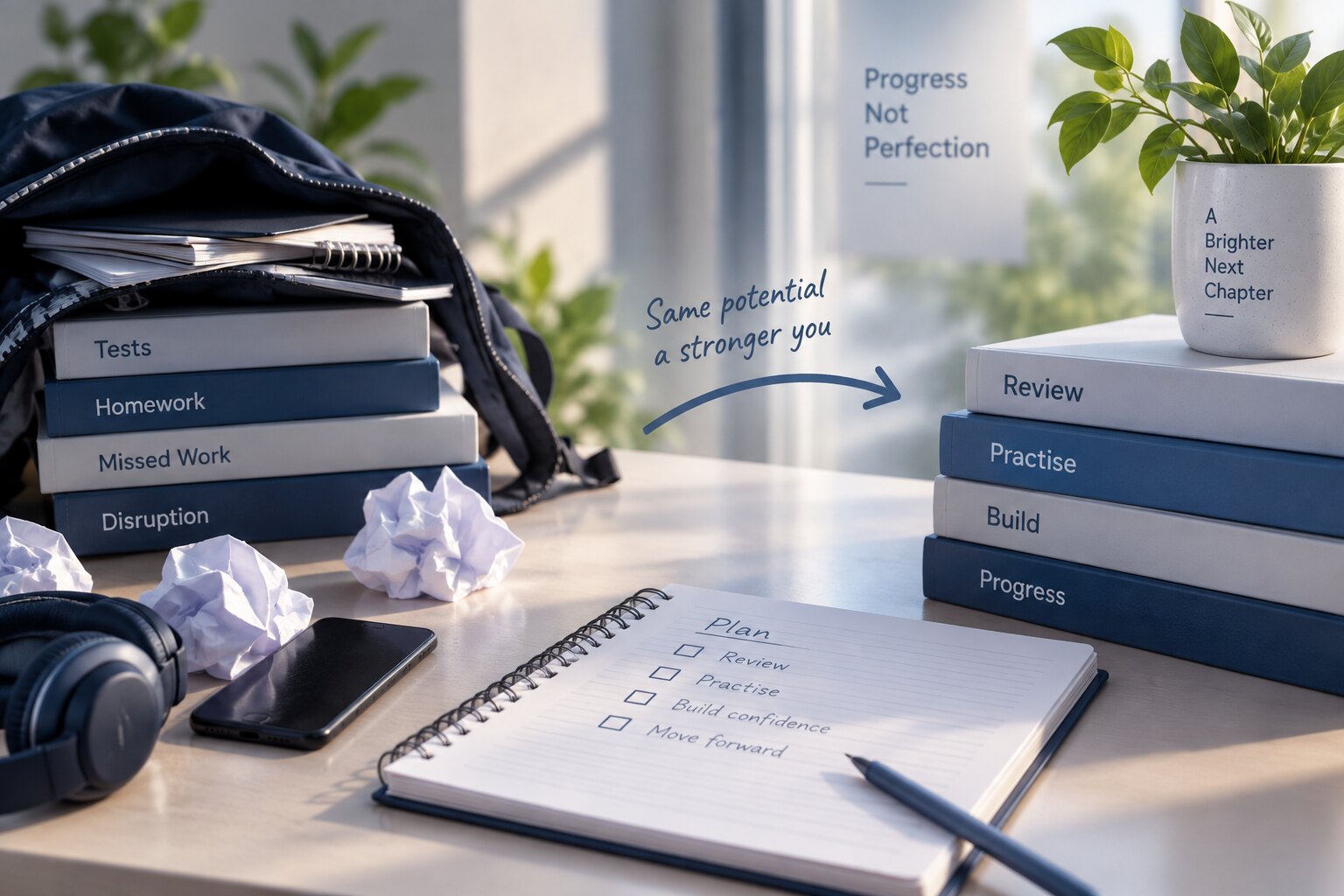

Sometimes education is seriously disrupted, by illness, family crisis, bullying, school closure, or global events like pandemics. When a child misses months or years of school, the gaps are not minor. They are fundamental.
Academic recovery is an intensive, structured programme designed to rebuild foundations and restore confidence. It is not just about catching up on content; it is about rebuilding the belief that learning is possible and worthwhile.
1. When Recovery Is Needed
Recovery is the right frame whenever schooling has broken down for long enough that a return to normal pace is no longer realistic. The most common situations we see are these.
- Long-term illness: serious illness that kept a child out of school for months. Recovery must address both academic gaps and the emotional impact of isolation.
- School refusal: anxiety, bullying, or other factors made school attendance impossible. Recovery includes rebuilding trust in the learning process.
- Pandemic disruption: extended school closures and ineffective remote learning left many children significantly behind their expected level.
- Family crisis: bereavement, divorce, relocation, or other family upheaval disrupted education. Stability and routine must be re-established.
2. How the Programme Works
Recovery follows five stages, always in the same order, because each stage depends on the one before it.
- Comprehensive assessment: a thorough evaluation across all core subjects to identify exactly where the child is, not where they should be. This includes academic skills, learning habits, and emotional readiness.
- Foundations first: recovery programmes prioritise core skills, literacy, numeracy, and learning habits. We do not rush to catch up on content until the foundations are solid.
- Confidence rebuilding: every session includes opportunities for success. We scaffold carefully so the child experiences achievement and begins to trust their own capabilities again.
- Gradual expansion: as confidence and skills grow, we expand the scope. More subjects, more challenge, more independence, always at a pace the child can sustain.
- Reintegration planning: from the start, we plan for the exit. Whether returning to school or continuing at home, the goal is successful, sustainable learning.
3. Timeline Expectations
Academic recovery is not an overnight fix. It requires months, not weeks. But with consistent effort, most children can return to age-appropriate work within 6 to 12 months.
- Months 1 to 3: foundations and confidence
- Months 4 to 6: expanding subjects and skills
- Months 7 to 12: consolidation and transition