



In this article
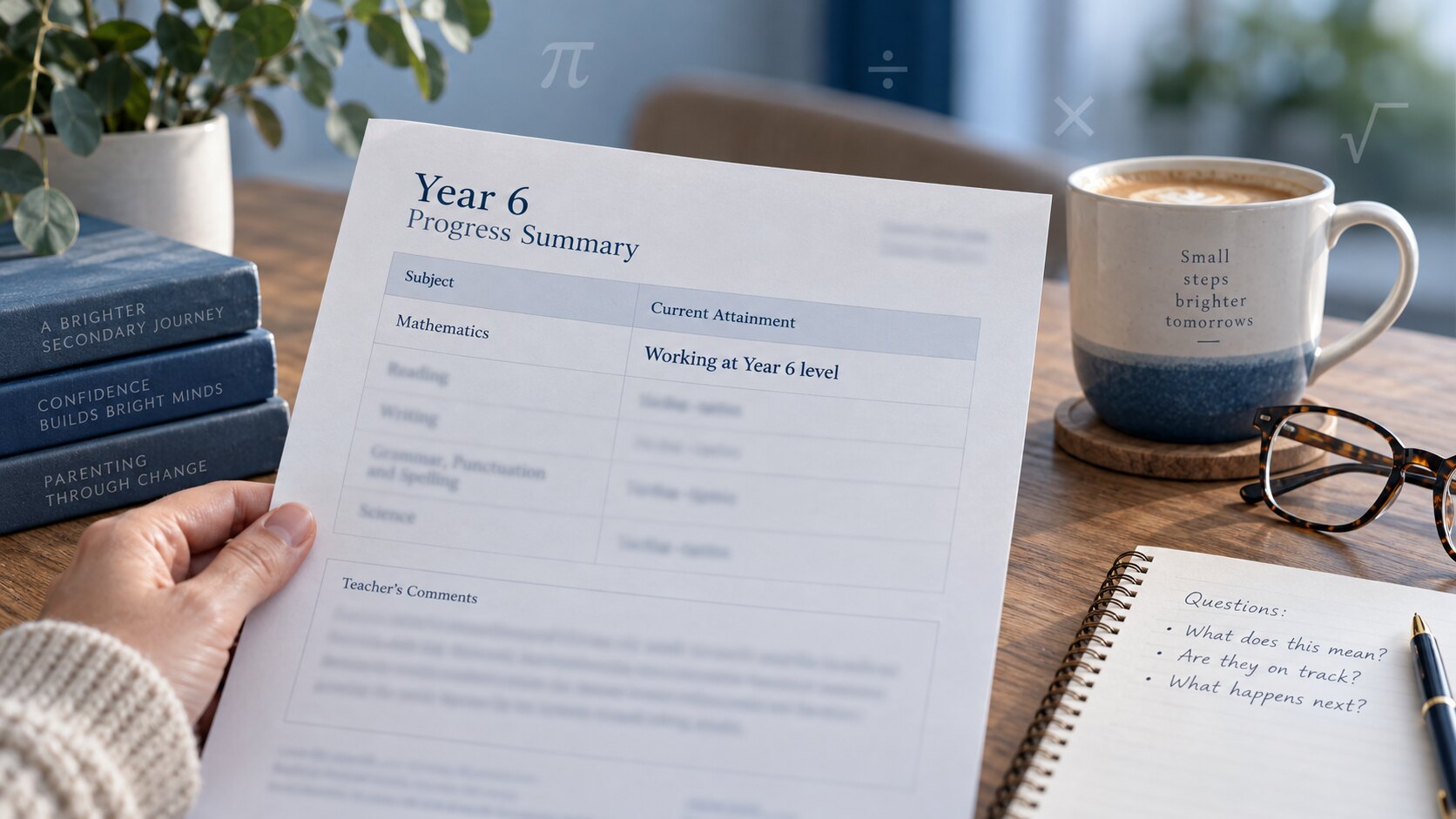
When a school says a child is working at Year 6 level, it is making its own judgement that the child is securely meeting the expectations set out in the Year 6 programme of study for that subject. It is not a national grade, and it is not a mark. Two schools using the same phrase about the same child may mean noticeably different things by it.
That is not a criticism of schools. It is a direct consequence of how assessment in England works between the statutory tests.
1. Why the Phrase Is Vaguer Than It Sounds
National curriculum levels, the old system where children were reported as a level 4b or a level 5c, were removed in 2014 and deliberately not replaced. Schools were left free to develop their own approach to in-school assessment, and most built systems that describe attainment in terms of year groups instead. So “working at Year 6 level” is your school’s internal vocabulary, sitting on a national curriculum that is genuinely national, but on a grading scheme that is not.
The curriculum underneath it is solid ground. The programmes of study for mathematics are set out year by year for key stages 1 and 2, so there is a defined body of content that Year 6 refers to. The complication is that schools are only required to teach the relevant programme of study by the end of the key stage, which means they can introduce content earlier or later within it. A school may cover long division in the autumn of Year 6 or the summer, and both are compliant.
2. The Words That Go With the Year
Most primary schools attach a qualifier to the year group. The exact wording varies, but the structure is usually the same.
- Working towards. Some of the year’s content is secure, but not enough of it to be judged as meeting the standard.
- Working at the expected standard. The child is meeting the expectations for that year group.
- Working at greater depth, or exceeding, or mastering. The child meets the standard and can apply it to less familiar problems, rather than having moved on to next year’s content.
3. Greater Depth Is Not Next Year’s Work
That last point matters and is frequently misread. Greater depth in the English system usually means more sophisticated work within the year group, not acceleration into the year above.
At the end of Year 6 you also get something national and comparable. Key stage 2 test results are reported as a scaled score, and the range at key stage 2 runs from 80 to 120, where a score below 100 means a child may need more support to reach the expected standard. That number is standardised across the country, which is precisely what a school’s own year-level judgement is not.
4. Three Things the Phrase Does Not Tell You
It does not tell you which parts are secure. A year-level judgement is a summary across the whole subject. A child can be judged as working at Year 6 level with strong number work and weak geometry, and the phrase absorbs both.
It does not tell you whether earlier content is intact. This is the one that surprises parents most. Maths content is cumulative but assessment of it is usually recent, so a child can be meeting Year 6 expectations on the topics currently being taught while carrying an unresolved gap from Year 4. The judgement describes performance on this year’s work, not the integrity of everything underneath it.
It does not predict secondary performance directly. Secondary schools set their own baseline assessments in Year 7 for exactly this reason, and many students find their reported position shifts.
5. Better Questions to Ask at Parents’ Evening
“Is she working at Year 6 level” invites a yes. Replace it with something the teacher can answer specifically.
- Which areas of maths is she most secure in, and which are you least confident about?
- Is the judgement based on the end of unit tests, on classwork, or on a standardised test?
- If there is one thing she should consolidate before the end of the year, what is it?
- Where does she sit against the expected standard, rather than against the class?
6. What to Do With the Answer
Teachers generally give a much more useful answer to these, because they are questions about evidence rather than about labels.
If the judgement is at or above expectations, the sensible follow-up is to check whether anything earlier has quietly slipped rather than to push ahead into next year’s content. If it is below, the useful move is to find out which specific skills are missing rather than to work harder on the current topic.
The Ivy Maths curriculum checklists set out what each year group covers in plain language, so you can see what Year 6 actually contains rather than inferring it from a phrase on a report. If you want to identify specific missing skills, how to identify gaps in your child’s maths knowledge covers the method.