
Quick Lesson
YEAR 6 ANGLES
Angles
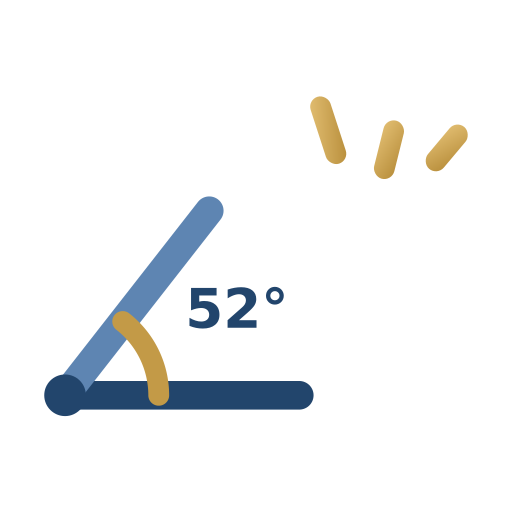
An angle measures an amount of turn between two lines, in degrees.
What does this mean?
An angle measures an amount of turn between two lines, in degrees. Angle facts, like angles on a straight line adding to 180°, let you work out missing angles without measuring.
Key words:
- Angle The amount of turn between two lines that meet at a point, measured in degrees.
The key rule
A full turn is 360°, a straight line is 180°, a right angle is 90°.
In words:
- Angles around a point add to 360°; angles in a triangle add to 180°.
- Vertically opposite angles are equal; parallel lines create equal alternate and corresponding angles.
Remember
Common slip: measuring from the wrong zero on the protractor, start from the line.