
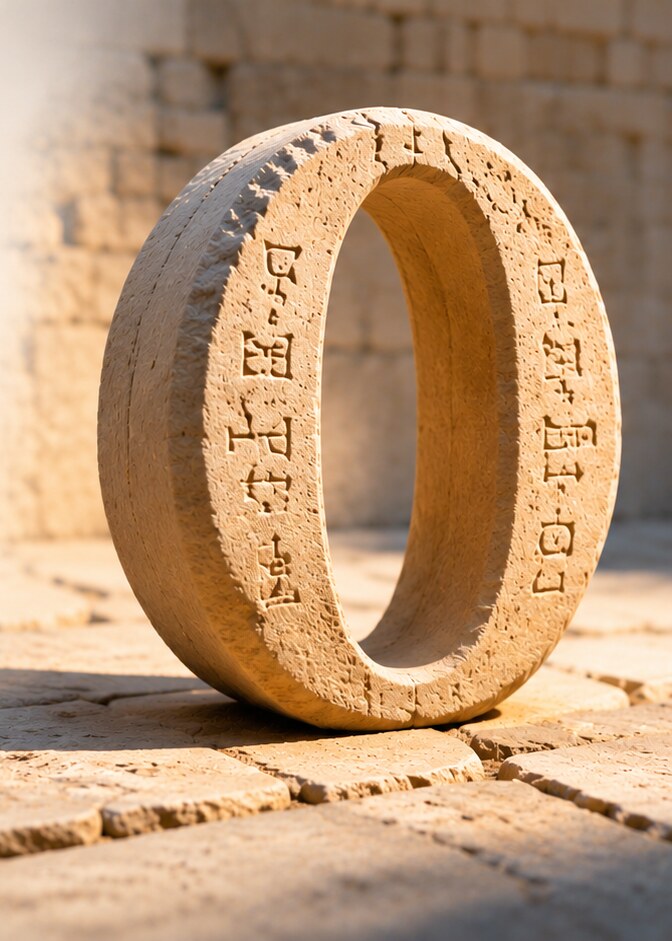

Imagine waking up tomorrow to discover that the number zero has disappeared. Your phone number has changed. Your calculator no longer works properly. The year 2026 is impossible to write using our usual digits. Even the number 10 has become a problem. You can still count to nine. But what happens next?
The Date: with and without zero
You could invent an entirely different way of writing numbers. The Romans managed without a zero symbol, after all. But the extraordinarily efficient number system we use today would be in serious trouble.
And here’s the strange part. Human beings were doing mathematics for thousands of years before zero became a number in its own right. They could build pyramids, follow the stars and calculate enormous quantities. Yet treating nothing as something you could calculate with was a remarkable intellectual leap.
The most powerful number is the one that means nothing.
Why we need a zero1.The Problem With an Empty Space
Our number system works by position. The same digit is worth a different amount depending on where it sits: in 222, the first 2 is worth two hundred, the second twenty and the last just two. Each step to the left is worth ten times as much as the one before, which is why ten digits, 0 to 9, are enough to write any whole number at all.
But the system has one weakness. A digit’s value depends on knowing which column it is in, and sometimes a column has nothing in it. Imagine you have 25 gold coins. Now imagine you have 205. The difference is enormous, yet the same two digits, 2 and 5, appear in both. Look at what separates the two numbers.
What do the zeros do?
205
two hundred and five
205 is 2 hundreds, 0 tens and 5 ones; without its zero it becomes 25, which is 180 less. 307,001 is 3 hundred thousands, 7 thousands and 1 one; without its three zeros it becomes 371, which is 306,630 less.
One tiny symbol changes the value by 180. Without that zero, how would you know that the tens column was empty?
Construction: with and without zero
Ancient Babylonian mathematicians faced this problem. For centuries they simply left a gap, so a number could be misread. By around 300 BCE they were writing a mark, two small slanted wedges, to show that a position in a number was empty.
But there is an important difference between a mark that shows an empty space and zero as a number. One says, “There is nothing in this position.” The other says, “Nothing has a value, and we can do mathematics with it.”
That second idea would change mathematics forever.
Zero becomes a number2.The Mathematician Who Gave Nothing a Place Among Numbers
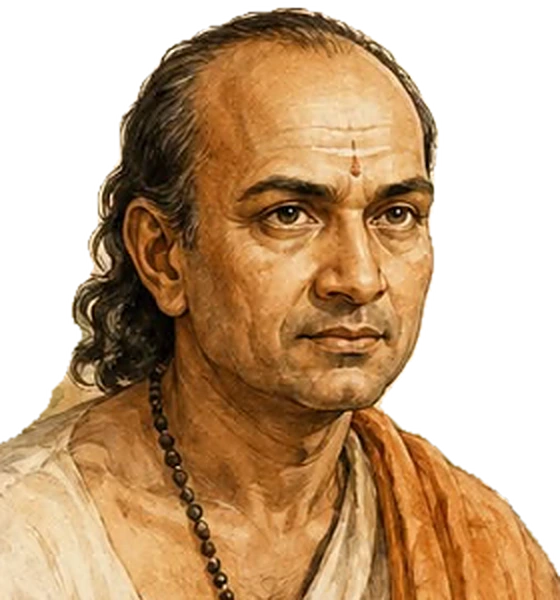
In 628 CE, the Indian mathematician and astronomer Brahmagupta wrote a book, the Brahmasphutasiddhanta (meaning “Correctly Established Doctrine of Brahma”), setting out mathematical rules, including how zero behaves when numbers are added, subtracted and multiplied. He described zero as what you get when you subtract a number from itself.
It is the earliest surviving text we know of to give arithmetic rules for treating zero as a number.
- Zero plus five is five.
- Five minus five is zero.
- Five multiplied by zero is zero.
These rules might seem obvious today, but that is partly because we’ve grown up using them. Brahmagupta was turning the absence of a quantity into something mathematics could handle.
And he wasn’t the only person exploring the idea. The Maya of Central America independently developed a zero, often drawn as a shell, for their number system and their calendar. The history of zero is a story of remarkable ideas emerging in different parts of the world.
Timeline
3.How nothing became a number
c. 300 BCE
A mark for an empty place
Babylonian scribes, writing on clay tablets, begin to use two small slanted wedges to show that a place in a number is empty. It is a placeholder, a way of keeping the other digits in their columns, but not yet a number you could calculate with.
3rd–10th century
The Bakhshali manuscript
A farmer digging near the village of Bakhshali, in what is now Pakistan, found this birch-bark book of arithmetic in 1881. It writes zero as a small dot. Radiocarbon tests in 2017 dated some of its pages to the 3rd or 4th century, but historians still disagree about when the text itself was written.
c. 250–900
The Maya of Central America
Maya astronomers and stone carvers use a zero sign, often drawn as a shell, to record dates in their calendar. They arrived at the idea on their own, with no contact with Asia or Europe.
628
Brahmagupta
In his book, the Brahmasphutasiddhanta, Brahmagupta sets out rules for adding, subtracting and multiplying with zero. For the first time in a surviving text, zero is treated as a number in its own right.
c. 825
Al-Khwarizmi
Working in Baghdad’s House of Wisdom, al-Khwarizmi writes a book on calculating with the Indian numerals, zero among them. It carries the system across the Arabic-speaking world, and his own name later gives us the word “algorithm”.
1202
Fibonacci’s Liber Abaci
Leonardo of Pisa, known today as Fibonacci, introduces the numerals and zero to European readers in his Book of Calculation, showing merchants how much faster and more reliable they make their accounts.
Multiplying by zero4.The Number That Behaves Unlike Any Other
Here’s where zero gets especially interesting. Choose any number you like. A thousand. A million. A trillion. Multiply it by zero. The answer is always zero.
Maths Experiment
The Power of Zero
What happens when you multiply a number by zero?
Or type any number, as big as you like.
250 × 0 = 0
No matter how large your number becomes, the answer stays zero.
Every choice produces the same answer. Zero is the only number with this effect when you multiply by it.
And yet, if you add zero to a number, nothing changes at all. A number that can wipe out any quantity through multiplication leaves every quantity untouched through addition. That’s a rather extraordinary combination of properties for something that represents nothing.
Dividing by zero5.But There’s One Thing Zero Cannot Do
Division asks how many times one number fits into another, or which number, multiplied by the divisor, gives the number you started with. 12 ÷ 3 = 4, because 4 × 3 = 12.
Make a prediction
So what is 12 ÷ 0?
That is why ordinary arithmetic leaves division by zero undefined. Even today, with centuries of mathematical discoveries behind us, you cannot simply divide by zero and get an ordinary number.
Zero today6.A World Built With Nothing
Zero is now so ordinary that we barely notice it. It appears in the temperature on a cold morning, in bank balances, in coordinates used to locate places and in the mathematics underlying computers, which store everything as patterns of 0s and 1s.
Measurement: with and without zero
But perhaps its greatest achievement is less obvious. Zero lets us tell a quantity that exists from one that doesn’t, and write both in the same number system. It helped people calculate with remarkable efficiency, and it became part of the foundations on which later mathematical ideas were built.
Commerce: with and without zero
The next time you write 10, 100 or 1,000, look at those zeros. They aren’t just empty spaces. They’re telling the other digits exactly what they’re worth.
Money: with and without zero
7. Open Discussion
Can nothing really be something?
- If zero represents nothing, why do we need a symbol for it?
- Why does putting a zero on the end of a whole number make it ten times larger?