

8 pieces
Student Story 2 min read
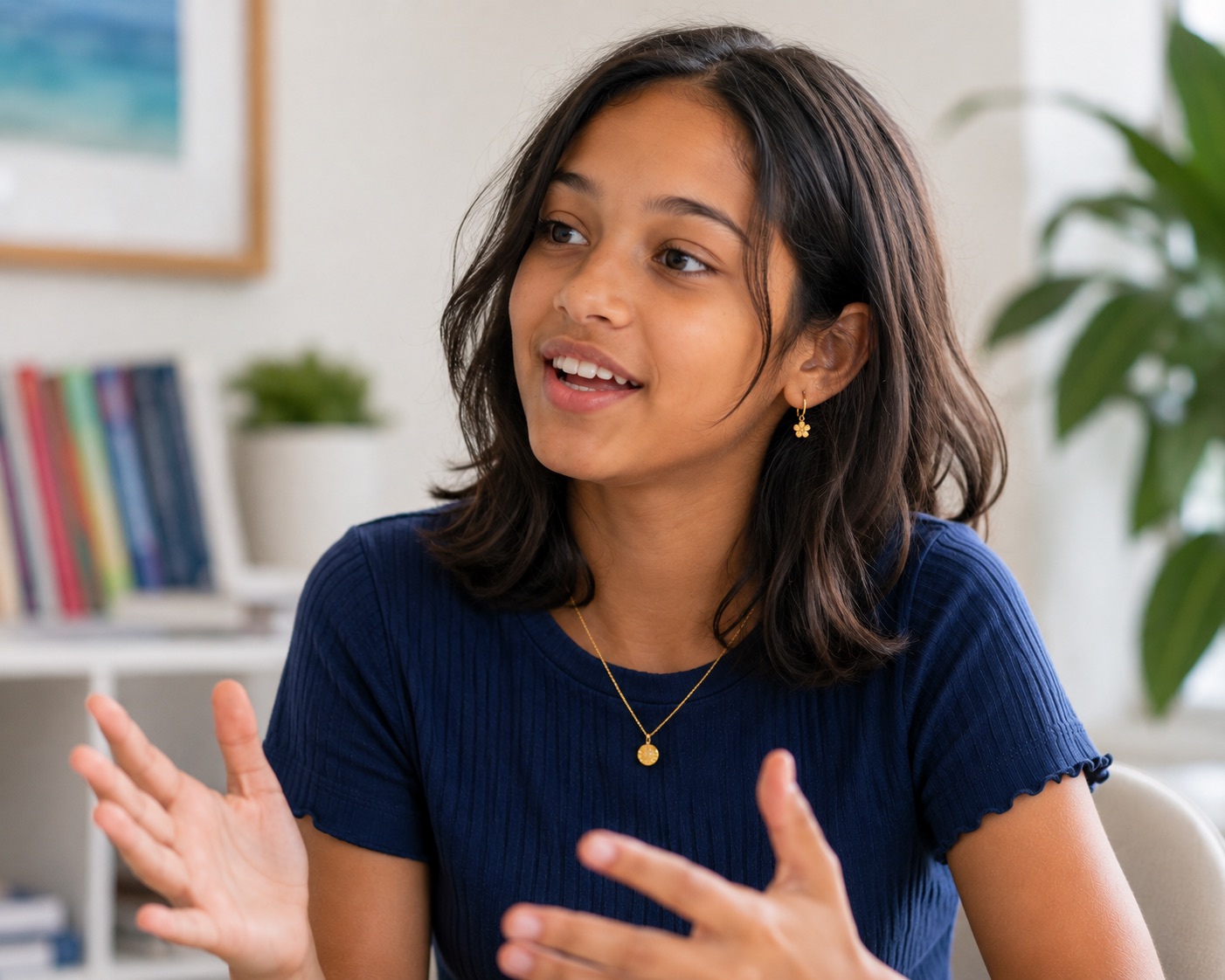
Rhia: Three Years Beyond Her Year Group
Rhia is 12 years old and in Year 7. After taking an Ivy Assessment, her results showed she was working beyond her year group and ready for greater challenge. Six months later she is studying Year 10 maths.

Student Story 2 min read
Ollie: The Gaps He Did Not Want to Admit
Ollie had gaps in his maths he did not want to admit. His Ivy Assessment showed exactly where they were and set a programme to close them. He found his confidence and caught up with his year.
Big Idea 3 min read
Why Zero Had to Be Invented
People counted for thousands of years without a number for nothing. Zero as a number in its own right, one you can add, subtract and multiply with, was an invention, and it made place value and modern arithmetic possible.
Big Idea 3 min read
The Seven Bridges of Königsberg
Could the people of Königsberg cross each of its seven bridges exactly once? Leonhard Euler proved they could not, and invented a way of thinking that now runs maps, networks and the internet.
Big Idea 3 min read
A Prime Number Is Never the Last One
The primes are the numbers that cannot be broken into smaller factors, and they get rarer as the numbers get bigger. Euclid showed that however far you go, there is always another one. His proof still fits on a postcard.
Big Idea 3 min read
The Number That Never Ends
Every circle, however large or small, has the same ratio between the distance around it and the distance across it. That ratio is pi, a little more than three, and its digits go on forever without ever settling into a pattern.
Big Idea 3 min read
Fibonacci and the Sunflower
Start with 1 and 1, and add the last two numbers to get the next: 1, 1, 2, 3, 5, 8, 13, 21. Count the spirals on a sunflower head or a pine cone and you will usually find two neighbours from that list.
Big Idea 3 min read
Measuring the Earth with a Stick
Eratosthenes heard that at noon on midsummer’s day the sun shone straight down a well in Syene, while in Alexandria a stick cast a shadow. From that angle and the distance between them, he measured the Earth.